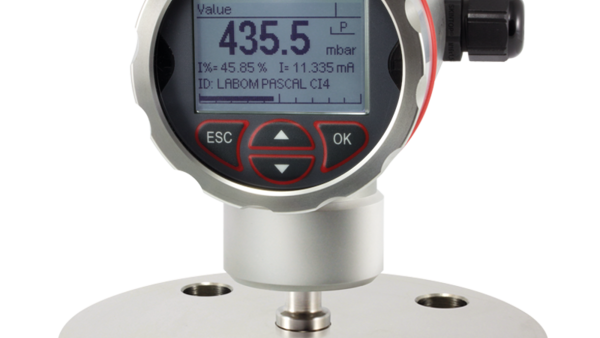
Tracking down temperature errors – LTC technology at Red Bull
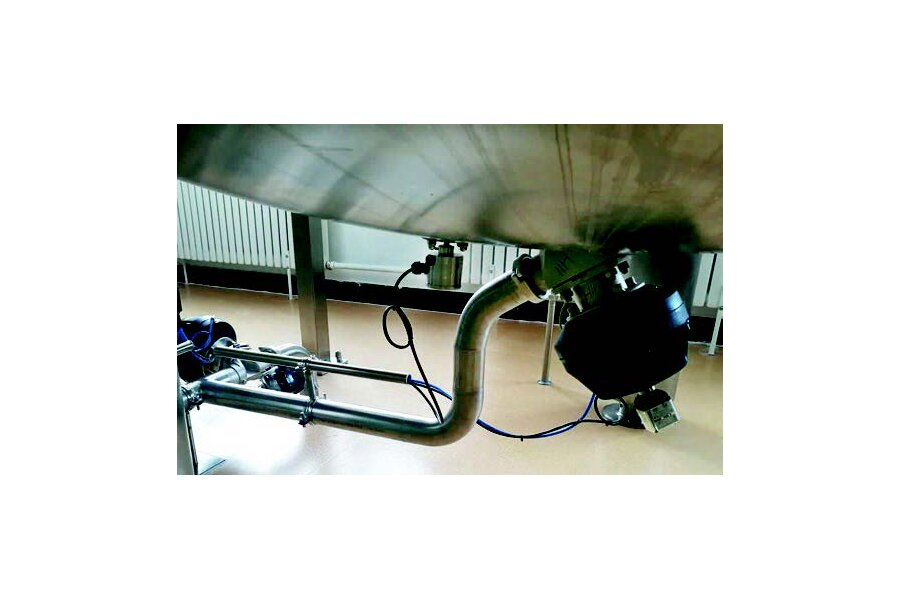
Approximately 4.5 million cans of the well-known energy drink are produced annually at five Red Bull plants. To cope with this enormous volume, production must not only run smoothly but also be organised as efficiently as possible – the company is therefore always on the lookout for innovative technologies to address bottlenecks in the production process.
Vulnerability in level measurement
One such weakness has previously been identified in the level measurement of the tanks in which the liquid ingredients are mixed. As is common in the food and beverage industry, Red Bull uses pressure transmitters for level measurement to isolate the process from the measuring instrument, thereby meeting all the hygiene requirements of the food and beverage industry. The diaphragm of the pressure transmitter transmits the pressure to the actual measuring instrument via a carrier fluid inside. There, the level is then derived from the measured pressure. However, standard pressure transmitters have a fundamental limitation: temperature fluctuations in the process lead to inaccuracies in the measurement result. This phenomenon, known as a temperature error, can result in significant delays in production. At Red Bull, one step in the manufacturing process involves heating the liquid mixture from 20°C to 92°C. Once the correct temperature is reached, the tank is emptied and the next batch is filled – again at 20°C. This is precisely where the temperature error arises: when the tank is emptied and the colder mixture is filled in, the carrier fluid inside the pressure transmitter – an oil – contracts due to the lower temperatures. The result: the
pressure acting on the diaphragm is not transmitted correctly. The tank is therefore displayed as empty, even though it is already full. To avoid this dynamic temperature error, Red Bull previously filled the tank only partially, then paused the process. Only once the temperature difference had subsided could the tank be filled completely and production resumed – a cumbersome and time-consuming process for which a solution was urgently sought.
High-precision diaphragm seal in use in Red Bull production
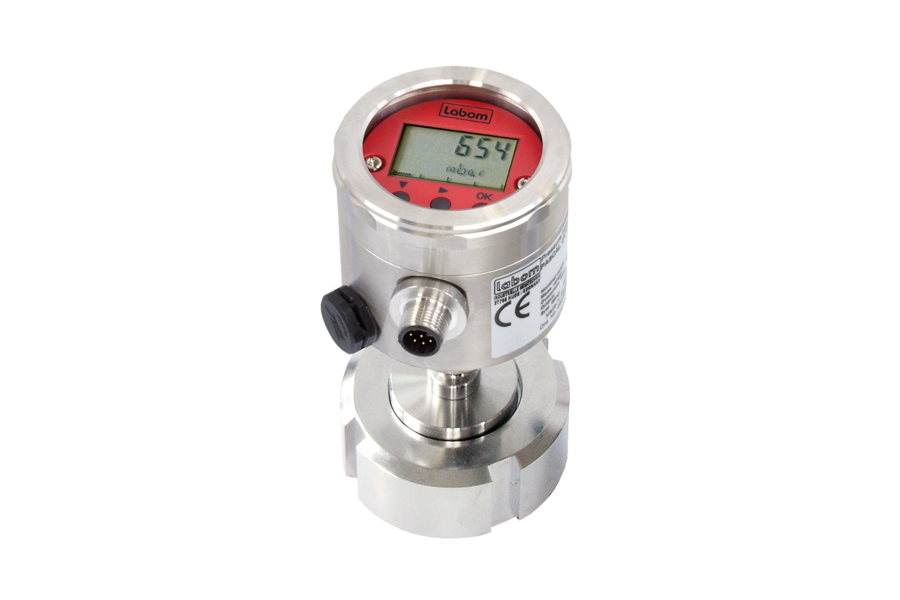
The diaphragm is crucial
This is where the measurement equipment manufacturer Labom came into the picture in 2012: the Hude-based company has always stood out for its highly customised, client-specific products. That is why any collaboration always begins with a thorough understanding of the system into which the measurement equipment is to be installed. “Only when we fully understand the customer’s process can we find the optimal solution,” says Jianren Cong, Sales Manager at Labom. “We therefore took a close look at Red Bull’s production processes to find the best approach.”
There are various ways to reduce temperature error – and Red Bull also had to work out which one was the right one for each individual case. In addition to specialised programming, one promising solution is a diaphragm that is so flexible that it yields even to the slightest changes. Contraction or expansion of the carrier fluid due to temperature fluctuations no longer results in altered measurement results, as the membrane compensates for the fluid’s movements. This means the pressure on the measuring device is no longer distorted. Conventional approaches to achieving this effect include, for example, a significantly enlarged or very thin membrane. However, neither option was viable for Labom and Red Bull: “There was no room for a larger membrane in the production facility, and a thinner membrane would be far too susceptible to cracks or damage – so a different solution had to be found,” explains Cong.
Focus on LTC technology
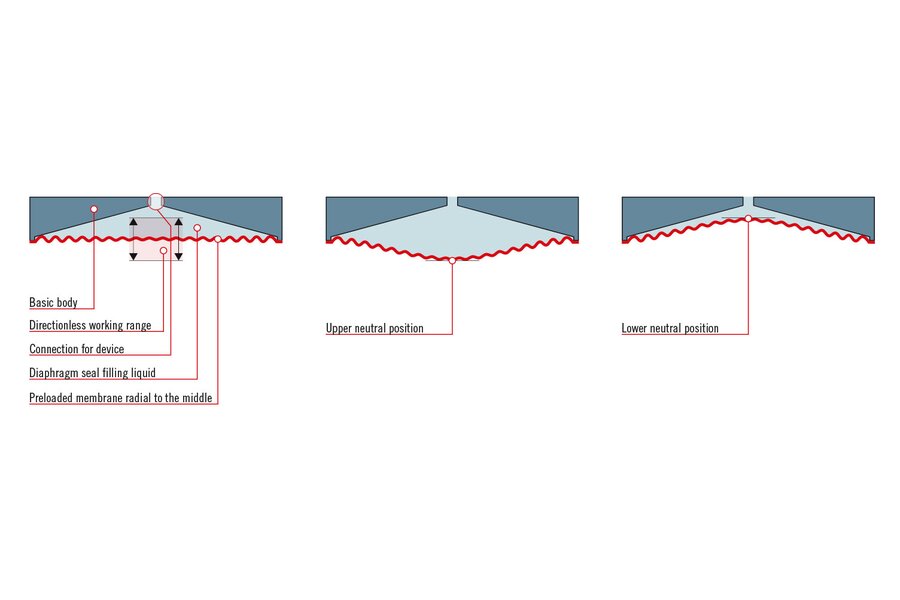
The solution: Red Bull opted for Labom’s patented LTC (Low Temperature Coefficient) technology. This involves giving the diaphragm of the diaphragm seal special profile and a slight curvature. This curvature means that the diaphragm has two natural resting positions – an upper and a lower one. In a special, patented manufacturing process, pressure transmitters with this diaphragm are filled in such a way that the diaphragm is positioned exactly between the two rest positions. The result: the diaphragm can be deflected in this position with virtually no force, thereby compensating even for large expansions of the carrier fluid.
The result exceeded all expectations: the temperature error at Red Bull was almost completely eliminated; only a minimal inaccuracy at the start of the filling process is now still observed. Unlike before, however, this minimal deviation disappears after a very short time, meaning that the measurement result can be read correctly and reliably long before the required fill level is reached. The waiting time for the temperature to stabilise has since been completely eliminated, which represents an enormous time saving – and thus a more effective, error-free process overall.
“The LTC diaphragm compensates for temperature errors so reliably that it can actually be significantly thicker than usual – this enhances safety without compromising the measurement result,” explains Cong. Of course, the principle still applies to LTC diaphragms: the larger the diaphragm, the lower the temperature error. Red Bull therefore uses pressure transmitters with a diameter of 50 mm – these enable virtually error-free measurement. “Over 100 of our pressure transmitters featuring LTC technology are currently in use across three Red Bull plants,” says Cong. “The devices are so robust that they hardly ever need replacing – everyone involved is very satisfied with the outcome of the collaboration.” Cong also sees considerable potential for LTC technology in Germany. As it virtually eliminates temperature error, Labom’s LTC pressure transmitters represent a genuine alternative to more expensive temperature-tolerant methods of level measurement, such as weighing.
Related articles
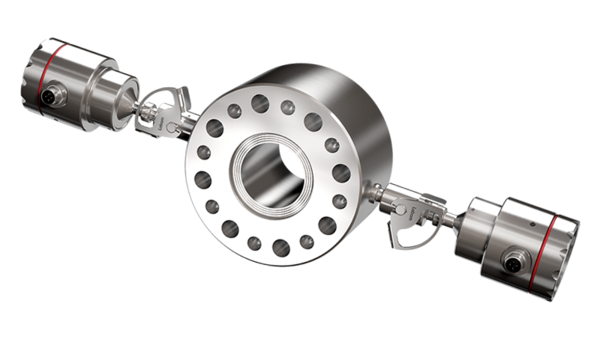
A bespoke pressure transducer solution for the food industry
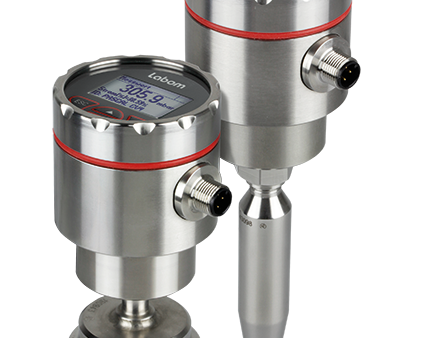
Rugged measurement technology for the dairy industry: The new V-Line

The Ci4 in the pharmaceutical and food industries: measurement accuracy and user-friendliness